Mastercard · Department of Tourism Philippines (2025)
Helping write the next chapter of Filipino tourism, where technology meets hospitality.
There's something quietly powerful about watching technology meet hospitality in a country known for its warmth. That's exactly what Rozano Planta has been building toward.
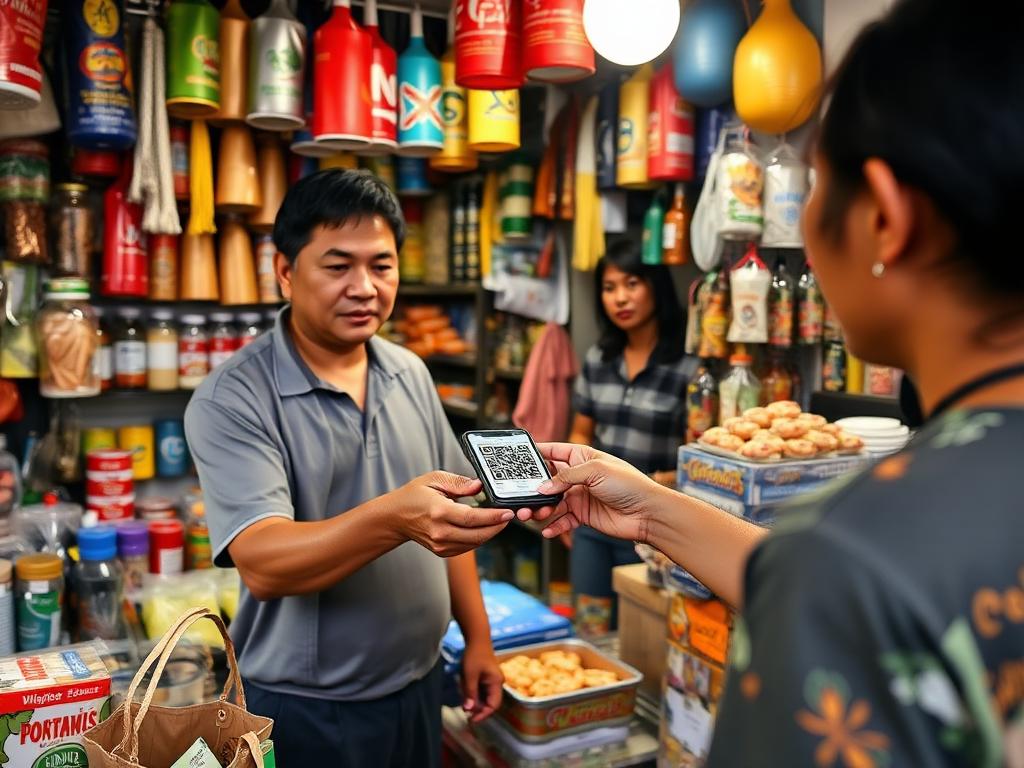
As Mastercard's Strategic Growth Director, Rozano has spent much of 2025 working hand-in-hand with the Philippines' Department of Tourism on something bigger than payments or platforms. He's helping write the next chapter of Filipino tourism, one where a family running a small carinderia (a neighborhood eatery) in Palawan can accept a tap from a traveler's phone just as easily as a five-star resort in Manila, and where the country's legendary hospitality is matched by the ease of getting there, staying there, and falling in love with the place.
In June, Rozano sat across the table from Tourism Secretary Christina Garcia Frasco to launch a partnership between the DOT and Mastercard that goes well beyond a press release. None of it would have come together without a true partner on the government side: Assistant Secretary Sharlene Batin, whose steady leadership, sharp instincts, and deep care for the industry have turned a promising idea into real, moving work. She's the kind of collaborator every public-private partnership hopes for, someone who pushes for ambition while never losing sight of the people on the ground.
The vision is simple but ambitious: make it easier for the world to experience the Philippines, and make sure the small businesses along the way feel the lift.
That means smoother digital payments across the country's most-loved tourist corridors, smarter use of data to bring travelers to places that need them, and quieter wins like a family-run homestay in Siargao suddenly seeing bookings from countries they've never heard of. The partnership ties into the National Tourism Development Plan for 2023 to 2028, and it's already riding a wave of momentum: inbound tourism revenue has surged, and the country is ready for more.
What makes this work feel different is who it's for. Behind every data point is a tindera (a woman shop vendor), a tour guide, a banca operator (an outrigger-boat skipper), a lola (a grandmother) selling mangoes at the ferry terminal. Rozano works closely with senior Mastercard leadership, and side by side with Assistant Secretary Batin and her team at the DOT, to make sure these public-private collaborations don't just hit growth targets, they reach the people who've been holding up Philippine tourism with their hands, their stories, and their smiles all along.
It's the kind of work that doesn't always make headlines. But somewhere in a small town you haven't visited yet, a vendor is closing out her day with a few more pesos than yesterday. And that, in the end, is the point.
Source: Mastercard Newsroom · "Department of Tourism and Mastercard announce strategic collaboration to drive tourism growth in the Philippines" (2025) →
Proposed Initiative · MinDA · Digital Pathways for Mindanao
Building digital pathways for Mindanao's farmers, SMEs, and communities
Mindanao's development story is being shaped by a powerful collaboration: government setting direction, private partners driving innovation, and communities becoming active participants in inclusive growth.
At the helm of the Mindanao Development Authority (MinDA) is Secretary Leo Tereso Magno, who took his oath as Chairperson in May 2024 following his appointment by President Ferdinand Marcos Jr. Under his leadership, MinDA continues to advance an agenda anchored on unity, regional cooperation, investment promotion, and inclusive development. As the Philippine Signing Minister for BIMP-EAGA, Sec. Magno also champions Mindanao's role in cross-border trade, tourism, connectivity, and sustainable regional growth.
Working alongside him, Assistant Secretary Romeo Montenegro brings deep expertise in Mindanao development, investment promotion, renewable energy advocacy, and BIMP-EAGA cooperation.
Together with Rozano Planta, this partnership can advance a practical, people-centered agenda by using digital technology, financial inclusion, and market linkages to uplift small farmers, fisherfolk, cooperatives, SMEs, and rural communities.
A digital bridge for agriculture and enterprise
A promising area of collaboration is the use of digital agriculture and financial inclusion platforms to modernize how rural value chains operate. By digitizing farmer registration, transactions, payments, workflows, and market linkages, Mindanao can help small producers become more visible, bankable, and connected to formal economic opportunities.
For farmers and fisherfolk, this means stronger access to buyers, better pricing opportunities, and clearer records of income and production. For cooperatives and SMEs, it means improved procurement, payment collection, inventory visibility, delivery coordination, and working capital management.
For Mindanao, this is more than a technology initiative. It can become a practical bridge connecting farm productivity, digital payments, credit access, logistics, market access, SME growth, and investment readiness.
Five priority outcomes
Through collaboration with MinDA and like-minded public and private partners, digital agriculture and financial inclusion initiatives can deliver:
- Stronger market access for farmers. Better registration, crop visibility, and buyer matching can make small producers more visible to aggregators, processors, exporters, institutional buyers, and agri-SMEs.
- More resilient SMEs and cooperatives. Digital platforms can help rural enterprises manage procurement, payments, deliveries, inventory, and working capital more efficiently.
- Data-driven financial inclusion. Digitized harvest, sales, and transaction records can help farmers and rural entrepreneurs build stronger credit profiles recognized by financial institutions.
- More targeted government programs. Better data can help MinDA identify where financing, training, logistics support, infrastructure, climate resilience, or enterprise development interventions are most needed.
- A more investable agriculture sector. Modern, inclusive agribusiness can support MinDA's wider thrust on investment promotion, renewable energy, public-private partnerships, and regional competitiveness.
A shared purpose
The collaboration between Rozano Planta, Asec. Montenegro, and Sec. Magno is anchored in one goal: making development tangible for ordinary Mindanawons.
For farmers, that means better incomes. For SMEs, stronger access to markets and finance. For communities, more jobs, greater resilience, and stronger local enterprise growth. For Mindanao, it means a more connected, competitive, and inclusive economy.
At its heart, this work is not only about technology. It is about dignity, opportunity, and inclusion.
By combining MinDA's regional mandate, Asec. Montenegro's development advocacy, Sec. Magno's leadership, and Rozano Planta's digital financial services experience, Mindanao can build a new model of inclusive growth: one where farmers are no longer at the margins, SMEs are no longer held back by informality, and rural communities are linked to the engines of trade, finance, and innovation.
Together, this collaboration can help transform Mindanao's agricultural communities from underserved producers into empowered participants in a digitally enabled, investment-ready, and inclusive regional economy.
Accion · Digital Transformation Program
Building bridges to the unbanked: Rozano Planta's quiet work at the frontier of financial inclusion.
Somewhere in a village in India, a mother of three runs a small tailoring shop with thread, a single bulb, and a notebook of names she trusts. In a coastal town in the Philippines, a fisherman counts a week's catch in coins and crumpled bills. In a remote part of Myanmar, a young entrepreneur dreams of a loan she has been told, in a hundred quiet ways, is not meant for her.
These are the lives that sit at the center of Rozano Planta's work.
At Accion's Digital Transformation program, an initiative dedicated to helping financial service providers use technology and data to better serve underserved people and small businesses, Rozano served as a builder at the frontier of financial inclusion. His work helped financial institutions step away from their branch-heavy past and toward digital models capable of reaching the people who had long been kept outside the gates of formal finance.
His work sat at the difficult intersection of technology, regulation, operations, and human need. It was rarely glamorous. It was almost always meaningful.
India: An app as a doorway
In India, Rozano helped design Swadhaar FinAccess's mobile application, guiding the institution away from paper, field visits, and manual ledgers, and toward a digital, customer-centered model. For a low-income borrower or a small entrepreneur, that app was never just a screen. It was a doorway. A way to see a balance. A way to make a repayment with dignity. A way to belong to a financial system that had, for generations, felt out of reach.
The Philippines: Earning the right to serve
At First Valley Bank, Rozano helped the institution respond to and comply with findings from the Bangko Sentral ng Pilipinas, strengthening its ability to operate responsibly within the standards expected by the country's regulator. This is the kind of work the world rarely sees, the kind that lives in audit reports and quiet meetings. Yet without it, no promise of inclusion holds. Financial inclusion cannot be built on fragile foundations. It needs governance. Discipline. Trust. And someone willing to do the unseen work of earning it.
Myanmar: Laying the rails of access
In Myanmar, Rozano helped set up the technical operations of DAWN Microfinance, building the infrastructure needed to push digital financial services deeper into underserved communities. In a country where distance, cash dependency, and low banking penetration created daily barriers for ordinary families, technical operations became more than back-end machinery. They became the rails on which savings, loans, and livelihoods could finally move.
A pattern of crossings
Across India, the Philippines, and Myanmar, the pattern repeated itself. From manual to digital. From a few isolated branches to a wider, kinder reach. From compliance gaps to stronger controls. From exclusion to access.
Rozano's contribution was never only in designing systems, fixing processes, or setting up operations. It was in helping institutions become more capable of serving the people who are almost always last in line: microentrepreneurs working past midnight, informal workers paid in coins, rural families carrying their savings in their pockets, women-led businesses fighting to grow, and entire communities the conventional financial system has never quite reached.
This is the deeper promise of digital transformation. When done responsibly, it does not replace the human mission of microfinance. It amplifies it. It gives institutions the tools to serve more people, lower the cost of reaching them, strengthen risk management, and extend financial services far beyond the walls of any branch.
For Rozano Planta, this work was never about technology for its own sake. It was about turning institutions into bridges. Bridges that allow a tailor, a fisherman, a farmer, a young dreamer to walk from the margins of the financial system toward opportunity, resilience, and a life with more room in it.
Rozano Planta's work with Accion reflects a career-long mission: helping financial institutions modernize not for efficiency alone, but so they can reach deeper, serve better, and bring more underserved people into the promise of the formal economy. Because in the end, every line of code, every compliance fix, every new digital rail leads back to the same place: a person, somewhere, finally being seen.
Source: Accion · Digital Transformation Program — accion.org →